". . .the word of God is not bound." II Tim. 2:9b

Showing posts with label resources. Show all posts

Sunday, February 7, 2021

What Must Be Taught In Reading Instruction?

There are lots of things that get teachers excited. Lightbulbs going on, trend lines on a graph going up, rapport being cemented, the smell of the first sharpened pencil of the new school year. . . .

Ranking right up there in the top thrills of a teacher's career is collaborating with a great team to choose new curriculum.

At my district, I inherited literature textbooks that were published in 2007. There were no consumables, and we didn't have access to online resources now offered by the publisher to districts that purchase brand-new curriculum. That has meant a lot of reinventing the wheel, aligning outdated texts to new standards, and even consulting Teachers Pay Teachers for quick answers. Throw in three sessions in quarantine due to COVID outbreaks, and the existing resources' deficiencies became that much more glaring.

So it's easy to see why new curriculum on the horizon is a matter for celebration. I'm eager to have resources at my fingertips to help me meet the needs of individual learners. I can't wait to get my hands on standards-aligned, research-based lessons and their corresponding assessments. I want online everything, alongside traditional textbooks so learners can access texts from home or at school, in a format that works best for them.

As we gear up to examine what exactly we are looking for in a reading/ELA curriculum, my administrator has arranged for a half-day intensive workshop (okay, she billed it as a party) to help focus our quest.

And there's homework! Each team member received curriculum samples from one publisher, with more on the way, to review ahead of the session. And we're reading an article on the Science of Reading by Laura Stuart, National Director for The Reading League. You can find it on the Zaner-Bloser Science of Reading Hub.

In the article, Stuart spells out answers to the burning question, "What must be taught?" Synthesizing current studies on how children learn to read, there are five essential components of reading that must be taught, as Stuart says, "thoroughly and skillfully." These are: phonemic awareness, phonics, fluent text reading, vocabulary, and comprehension. 

Stuart explains each component briefly before going on to offer evidence-based principles of instruction, or, the nuts and bolts of  "How to teach it."

I'm excited to see what my colleagues bring to the discussion after reading our homework and browsing curriculum samples. And I'm wondering, how might our collaboration on February 12 change the way we teach, even before we choose new curriculum? 


Also Read:

Using Mentor Texts to Teach Writing and Enhance Creativity

Presenting a Lively Professional Development: Strategies for Teaching English Language Learners

Friday, August 2, 2019

Fun and Inspiring Pinterest Boards for Teachers, Just in Time for Back to School

Hello, August! Let the countdown begin!

One of my most popular blog posts gives readers links to some of my teacher-y Pinterest boards with all sorts of back-to-school goodness for teachers in all grade levels. Since it's a new school year and I've changed up my Pinterest world a bit, I thought I'd share with you again.

Also new, you can now find me on Instagram @amyballardwriter. I post what's new in my TPT store, books I'm currently reading, resources for teachers, sales and freebies, and other eye candy for teachers.

Without further ado, here are my favorite Pinterest boards for your enjoyment!


Classroom/Content
Elementary
American Lit
Teaching HS (primarily ELA-focused)
Google Awesomeness (tips and tricks for teachers using all things Google)
Writing Fiction
Teacher Supplies (Okay, I love this one!)
Classroom Decor (with eight sections for themes, etc.)
Classroom Management
Teaching Vocabulary


For the Teacher's Well-Being
Christian Teacher, Public School
Smart, Professional Clothes (now with sections for accessories, shoes, etc.)
Painting
Lemons ("Squeeze the Day!" classroom theme, anyone?)
Travel Soon (with lots of fun, vintage travel poster art)
Healing Garden (Take a walk in my garden! It's soothing!)
Healthy -Ish Snacks
Living Coral 2019 (Pantone-inspired color board)
Blessings (Can I get an "Amen"?)
Books to Read in My Nonexistent Reading Nook When It Rains
Teacher Gifts
The Florist Shop
Writing Space


What's your classroom theme for fall 2019?
Follow a favorite teacher-pinner? Share with us in the comments so we can share the love!


Visit Brevity on Teachers Pay Teachers During the Sitewide Back to School Sale for 25% Off


What will you find in my store on TPT?


Visit Brevity on TPT during the sitewide Back-to-School sale August 6 and 7 to receive 25% off your total purchase. Now is the time to stock up on all those items on your wishlist!

Thanks for visiting!


Wednesday, August 2, 2017

How I Use Famous Shakespeare Quotes to Teach Literary Elements

Visit Brevity on TPT!

Just a few more hours to scoop up savings at Brevity and other stores on Teachers Pay Teachers at the Back to School sale! I've already found lots of great resources to help inject some Core-aligned energy into my lesson planning.


First Folio, cardboard cutout, the Bard, teacher
Me and Will Shakespeare
One of the units I teach every year in 9th, 10th, and 12th grade English is Shakespeare. They say "Necessity is the mother of invention," and necessity certainly inspired some of the Shakespeare unit resources I've created. I wanted a memorable way to teach literary elements and introduce students to the plays they would be reading before they ever got to the prologue.

I also wanted a way to build character through quotes from the play and the discussions the quotes would ignite.

The wall docs I created for Macbeth, Romeo and Juliet, and Julius Caesar help make connections for students, which is always a good thing. They build understanding of terms students will work with throughout the Shakespeare unit, and they help students remember what they learn.

How I Use Literary Elements in Famous Quotes Wall Docs in My Classroom


At the beginning of the semester, I hand out the full list of quotes and their corresponding literary elements, such as metaphor, symbol, or rhyming couplets. I explain that students will not be expected to memorize the quotes, but that they will need to be able to match the literary element to the quote that demonstrates it.

I then post the first quote doc on the wall and ask the class to read the quote aloud with me, either from the wall doc or from the handout. We then discuss the quote, the literary element, and how the language of the quote exemplifies the literary element. That's it for Day One. 

Macbeth quotes on my classroom wall
Each day, we repeat the reading and discussion for one week. On Monday of the next week, I introduce a new quote. Periodically, we review previous quotes and the terms that match them.

I assess students on terms and quotes as I see fit. This resource allows the teacher to use informal assessment daily without imposing an extra quiz on stressed-out students.

The beauty of working with specific famous quotes in a targeted way is that before students even read a line of the play, they become familiar with some of the famous lines and plot elements. Then, when we read the play and come across these quotes, light bulbs go on all around the room. Students see the quotes in context, understand the richness of the language, and remember the mechanics behind the poetry of Shakespeare. As an added plus, my students often tell me, "I was watching Sponge Bob and they quoted Shakespeare!" I love it when kids recognize literary allusions in the world around them. It's all about making connections!

Purchasing Shakespeare wall docs and other teacher resources from Brevity helps keep me blogging and helps keep ads on ChristianTeacherPublicSchool to a minimum. To take advantage of the Back to School Sale, just enter code BTS2017 at checkout! Thanks for your support!


Monday, July 31, 2017

Back to School Sale at Brevity on Teachers Pay Teachers


Welcome to August, teachers!

I'm excited to announce the Back to School sale at my shop, Brevity, on Teachers Pay Teachers! It's the first time I've participated in this fun sale, and I'm offering a 20% discount off all items in my store! The sale runs for just two days, so I hope you'll swing by and check out all the great deals and steals August 1-2! Remember, TPT shops offer freebies, too, so do yourself a favor, stock up and make your life easier this school year.

What will you find at Brevity on TPT?


greeting cards
8 Encouraging ECards for Teachers, Summer/Fall Collection

What else is new at Christian Teacher, Public School?

Dalene Parker (left) with Amy Ballard

I just got back from a wonderful visit with family in South Carolina and Kentucky. One of the added blessings of the trip was finally getting to meet my friend, author Dalene Vickery Parker, for the first time! Dalene and I talked about teaching, family, faith, and lots of other things over coffee at Due South Coffee in Taylors, SC. It was great to see her and talk with her instead of just exchanging emails and texts. 


If you haven't had a chance to read Dalene's books, please visit her on Amazon. Christian Teachers in Public Schools is a fantastic resource and an encouragement for the heart of the busy teacher. Words to Live By is a devotional focusing on one spirit-building word per week.

During my stay at my parents' home in Kentucky, my sister took me to an open mic at Etcetera Coffeehouse in Paducah. I got to read several poems from my chapbook, Landlocked. The room wasn't packed, but the crowd was great. And I highly recommend the coffee!

In other news, I decided to get off Facebook, so that means Christian Teacher, Public School is also off Facebook. You can still reach me by clicking on "Comments" below each post, or through my Web site, amyballard.com. Thanks for following!

I was recently challenged to organize a prayer walk to invite God's watchcare over staff and students at my school for the upcoming year. We'll see if my busy life can take that on, but in the meantime, let's all stop and pray right now for the new school year. I wish you all the best as you begin teaching soon!

Blessings,

Amy


Monday, February 20, 2017

New Tab: Autism Resource Links

"I will give thanks to You, 
for I am fearfully and wonderfully made;
Wonderful are Your works,
And my soul knows it very well."
Psalm 139:14 (NASB)


We've added an Autism resource tab to the top of the Christian Teacher, Public School blog. This small effort won't lead to the most exhaustive list of Autism Spectrum resources on the Web. Instead, I hope it helps readers of this blog form connections at crucial times in their journeys with autism (whether as parents, teachers, or as people on the Spectrum themselves) and to help others along the way.

Interested in writing about autism in the public school setting? I would like to connect with guest bloggers who are teachers or who are parents of public school children on the Spectrum. On the Spectrum yourself? Even better.

Here are some tips on writing about Autism for Christian Teacher, Public School:

  • Be clear: Who are you and why are your writing about this topic? What's your point? What are you helping/asking readers to do?
  • Be current and accurate in your research, citing sources as appropriate
  • Explain acronyms on the first use
  • Be personal, revealing actual perspectives of real people on the Autism Spectrum, not assumptions
  • Obtain permission, change names as appropriate, and be accurate in your representations of others
  • Connect readers to resources (lesson plans, accommodations, blogs, books, local chapters of Autism organizations, support groups, conferences, etc.)
  • Keep a positive and constructive tone
  • Be original (only your own work that hasn't appeared online before)
  • Keep the audience in mind. We exist specifically for Christian teachers who teach in public schools, although others may find us helpful. Our preferred content is uplifting, spiritually-relevant, and biblically-literate. We believe that God created all neurotypes as a reflection of His creativity, uniqueness, power, glory, and love. We celebrate autism as a gift from the creator. Not every article need express this perspective overtly, and "preaching" is not wanted. Just let your light shine.

How to Submit
Please query before sending submissions for consideration. Contact Amy Ballard by email at amy (at) amyballard (dot) com. Nominal payment may be available for quality content on Autism in the public school, especially if written by teachers or students (current or former) with Autism. We'd love to hear from you!

Saturday, February 4, 2017

Triple Entry Journals for Character Analysis in Lord of the Flies


Need resources for Lord of the Flies? I've just created a character analysis tool that will get students talking and writing about the text. Triple-entry journals are fun and easy, and they put the focus where it should be—on the text. The journals in this pack are designed for each of the four main characters in Lord of the Flies, but here's an open version you can use with any novel to analyze any aspect of the text.


Visit my store, Brevity, on Teachers Pay Teachers for more resources that are aligned with the standards you need to teach!


Sunday, January 8, 2017

Using Mentor Texts to Teach Writing and Enhance Creativity

"Mentor text" is a buzz-word in education circles, but what does it mean? How can teachers use mentor texts effectively in the classroom to teach reading and writing?

creative writing, teaching, giveaway, free, professional development, Idaho Coaching Network
Free PD Presentation on Using Mentor Texts
I recently had the opportunity to explore the topic of mentor texts and create a professional development presentation for my Idaho Coaching Network class. The result is "Using Mentor Texts to Enhance Creativity," and it's free to you from Christian Teacher, Public School for educational or PD use.

This presentation focuses on teaching writing using mentor texts such as "Four Eyes" by Nikki Grimes, "April Rain Song" by Langston Hughes, "Hope is the Thing with Feathers" by Emily Dickinson, and "The Rainy Day" by Henry Wadsworth Longfellow. The grade-level examples are approximately third-sixth, though the principles for using mentor texts extend lower and higher.

It's twenty-four below here in southern Idaho, and the snow is reaching record depths, but my mind turned toward spring when creating this Google Slides presentation. Hence the rainy-day, umbrellas-and-rubber boots theme. I hope you enjoy!

Know of a great strategy or resource to use with mentor texts? Have a favorite mentor text that you use in your classroom? Share in the comments!

More teacher resources:
Free Ninth Grade Vocabulary Presentation with Lots of Images to Help Kids Learn Words
Visit Brevity on Teachers Pay Teachers
Freebies from Dover Publishing

Tuesday, September 27, 2016

Learning Across All Dimensions--Meet With Christian Teacher, Public School's Amy Ballard at Idaho's Education Super Conference

Amy Ballard
It's almost conference time for Idaho teachers planning to attend the Education Super Conference in Boise Oct. 6 and 7. I'm thrilled to be presenting two sessions:

Writing and Publishing Narratives Using Digital Technology
Description:  In this session, teachers will learn to apply choose­-your-­own­-story structure to narrative fiction or nonfiction writing. Using Google Drive, teachers will learn to link story pages to form narratives with alternate endings.

Faith and the Public School Teacher
Description:  Can your faith coexist with your professional life? New legislation and news headlines may shake things up, but by identifying your stance on faith in the classroom, you will face the turbulence of our changing world with more confidence. In this session, teachers will learn what the law allows and expects of teachers who hold to a religious faith; take a look at teachers whose actions have come under scrutiny; and share appropriate ways to live out faith in the public school environment.

I'm eager to see how God will work, since conferences are always a time for reflection and change. Who will God bring across my path? Which sessions will bless me in unexpected ways? How can I be a blessing to some other attendee?

Okay, maybe for most people an education conference is just an education conference. But the way I see it, a Christian can and should view life through a spiritual lens. At a conference of any kind, you're outside your usual circle of acquaintances and responsibilities. Simply by making small talk with strangers between sessions or at lunch, you can let your light shine before men, that they may see your good works and glorify God.

Hope to see you in Boise!


Learning Across All Dimensions Education Super Conference
6 Strategies For Avoiding Conference Fatigue
Choose Your Own Adventure and Narrative Writing
Resources for Christian Teachers in Public Schools

Saturday, August 20, 2016

A Student-Friendly Checklist for 9th and 10th Grade ELA Writing

It's challenging to find user-friendly checklists for the Common Core standards. This year I've been playing around with some formats to help my students keep track of how they're doing. Here's my new student-friendly checklist for 9th and 10th grade ELA writing standards as a Google doc. I plan to use the same format to create check lists for the other standard sets I teach.

Obviously, teaching something once is not enough to merit a check mark. How has the student demonstrated understanding of the concept? For a brush-up on assessing understanding, read Edutopia's excellent article, 'What Exactly Is "Understanding?" And How Do We Assess It?'

Have a great resource to help teachers and students track understanding? Please share!

Thursday, August 11, 2016

Shakespeare's First Folio Comes To Boise, Idaho

Learn about school trips
A rare First Folio is coming to Boise! Visit the First Folio Web site to plan a class trip or other visit. There are lots of fun activities for kids and adults, as well as PD opportunities for teachers.

From the school trip registration page:

"Free Field Trip Opportunity from Boise State University, Albertsons Library and The Arts and Humanities Institute
You are invited to encounter Shakespeare's 1623 First Folio. Help theater, poetry, and literature come alive for your students at this once-in-a-lifetime event.
In celebration of the 400th anniversary of Shakespeare's 1616 death, the Folger Shakespeare Library in Washington, D.C. has arranged the ultimate book tour, with a Folio stopping in each state for a limited time.  As the only stop in Idaho, Boise will play host to the book that gave us The Bard as we know him.  Don't miss this unique chance to share Shakespeare with your students!"

Dates: Monday, August 29 - Friday, September 16

To find out more, contact the First Folio team at firstfolio@boisestate.edu.

Monday, August 8, 2016

Idaho Coaching Network, Year Two

I'm excited to be attending training meetings this week for the Idaho Coaching Network. It's my second year, so I'll be mentoring a "newbie" to the program and helping her with planning and drafting a unit, among other tasks. This year I'm the only teacher from my district participating in the ELA branch of the Network, but I get to hang out with (and learn from) lots of generous, dedicated, experienced teachers from other districts. Our coaches are wonderful, and I can honestly say it's been the best teacher training I've ever received.

One of the biggest benefits to me has been my growth as a presenter, whether it be in professional developments (PDs), conference sessions, or the public speaking aspect of classroom teaching. I've learned to give more meaningful feedback and to plan and write engaging, meaningful units that align with the standards. And I'm seeing myself as more of a teacher-leader, which encourages my administrators and colleagues to view me in that role, too.

If you teach in Idaho, consider learning more about the program and asking your district to let you participate next year. It's a time commitment for sure, but the training and research will stretch you as a professional. Continuing ed credits are available through Boise State University.

Visit the Idaho Coaching Network for more information and lots of free resources. If you're on Twitter, join the conversation at #IDedchat.

Wednesday, August 3, 2016

Free Ninth Grade Vocabulary Presentation with Lots of Images to Help Kids Learn Words

Words 1-50
As the summer winds down (I can't believe I'm saying that!) I am finally getting to my vocabulary reboot. The one I promised myself I would accomplish this summer so my students don't have to endure bland, rote, pictureless vocab instruction for one more day.

Although I certainly haven't finished the project, I'm off to a good start at last. The list I'm using as a base for freshman vocabulary comes from 100 Words a High School Freshman Should Know on vocabulary.com. Some words on the list seem fairly basic (like camouflage), but can students use the word camouflage to describe the pattern of fur on a wildcat, or do they think it only applies to a military-inspired, splotchy green pattern of fabric? And for ESL students, this may be the first exposure to the word.

Words 51-100
Here's my Vocab 9 presentation in two parts, free for you to use in your classroom. I don't own the photos in the presentation, so be sure not to use it for anything but educational purposes. If you share the slides with a colleague, please attribute it to me, Amy Ballard here at ChristianTeacherPublicSchool.blogspot.com.

This is only part of an effective vocabulary curriculum. I hope it helps engage students visually with words that might otherwise seem abstract. Be sure to let me know how it goes!

Enjoy!

Friday, July 8, 2016

Find Christian Teacher, Public School Elsewhere on the Web

Christian teachers belong in public schools as a ray of sunlight in a darkening world, an example of the believer to a world that is seeking. They can't thrive without God's help, though. They need the Holy Spirit to guide and to go before them. And they need encouragement from fellow believers who know that the struggle is not in vain. That's why Christian Teacher, Public School is here. To offer encouragement and light for dark days.

If you agree with the message of this blog, won't you follow us by email? You can also follow the Christian Teacher, Public School board on Pinterest and find us on Facebook.

8 Encouraging eCards for Teachers, Summer and Fall Collection
Support this blog by shopping at Brevity on Teachers Pay Teachers, where I offer many freebies in addition to resources on bullying prevention, literary elements in Shakespeare, and classroom management. See my latest eCards for back to school!

You can also help support Christian Teacher, Public School by shopping with our affiliate links for excellent products from Dayspring Cards Inc. and Dover Publications. I don't advertise for companies I haven't used and loved for years. Right now, both companies are having summer sales. Dover is offering up to 75% off on summer clearance through July 25, and Dayspring creates a sense of suspense with their Secret Summer Sale (shh!!), where you can use code SUMMER30 to get 30% off their top ten summer gifts.

Best of all, you can share this blog with teacher friends. Thanks for reading and blessing me! Teachers need encouragement, and I hope this is a great place to find it.


Tuesday, July 5, 2016

Wishing for a Magazine That Doesn't Exist. . .Yet

I love magazines. Sometimes I think that I blog because I'm pretending I'm a magazine mogul. It's been a lifelong regret that my college class schedule didn't allow me to take the Magazine Publication class offered at my school. It's the one that got away.

Reading the most recent issue of Christianity Today has me enraptured all over again. What is it about magazines in print form that still charm us, even when everyone's getting their news and gossip online?

Musing in this vein caused me to wonder, is there an excellent magazine for Christian teachers in public schools?

I've seen many publications for Christian teachers who teach in Christian schools. I've seen dozens of fine publications for teachers of all sorts who teach in public schools. But where's a magazine specifically geared toward public school teachers who hold to the Christian faith?

Why would such a magazine be important? For the same reasons blogs like this one and books like Dalene Vickery Parker's are important. Because Christian teachers in public schools need encouragement and help from each other. Sometimes they need perspective. Sometimes they need legal advice. Sometimes they need assurance, or fresh ideas, or a reminder why they're in this calling to begin with.

Could such a magazine make a go of it? Would it succeed and thrive? I don't suppose anyone in publishing would recommend launching a print magazine of any kind right now. The market for magazines is not steady, with print subscriptions down significantly. Online subscriptions are on the rise, though, experts say. One of the biggest hurdles is competition from free online media, complete with video content. According to Thad McIlroy on The Future of Publishing, "The shift of ad dollars to the web is perhaps the biggest problem facing broad-circulation magazines today."

I don't know if my imagined magazine would succeed in print form in today's market. If someone would launch it, though, I know what it should look like.

The magazine would be glossy and image-filled. Everything in its pages would offer encouragement, beauty in the midst of harsh realities, and direction for Christian teachers in public schools. Profile articles would follow teachers who are navigating the stormy waters of America's schools well. Intelligent reporting would cover the news on religious freedom issues, education trends, and conferences worth attending. And many voices would be heard, with many perspectives on the issues that face teachers today. It would be a magazine for every Christian who teaches in public schools.

I don't know why the blog post on this topic right now. Like I said, it's on my mind. But so is Luke chapter one, where two women were blessed by God and given children miraculously even as their little corner of the world experienced a fresh outpouring of the Holy Spirit. Maybe this magazine is not a reality yet, but maybe God will bring it to pass. Maybe I need to start praying.

What magazines do you love? Does a magazine like the one I'm describing exist? Please leave a comment.

Wednesday, June 29, 2016

Unstructured Play Week, Day 4, Part 1: Every Child an Artist

"He has made everything beautiful in its time." Ecclesiastes 3:11 ESV

Welcome back to Unstructured Play Week on Christian Teacher, Public School! Yesterday we rambled through the alfalfa field to a sandy beach in the middle of an Idaho creek. Today, we do art!

By my daughter, then three years old
My daughter's first artistic attempts came at age three, when she scribbled geometric shapes and named them like people. She loved birds, especially swans and ducks, so as her drawing skills developed, she often drew waterfowl. She went through reams of paper, usually leaving her work strewn about the house for her parents to gather up later. She was a living embodiment of the phrase "Practice makes perfect." Hundreds of papers, each with a single swan in black ball-point pen.


Blue Jay
When she was small, she didn't gravitate toward coloring books, which turned out fine because she learned to draw instead of learning to fill in predetermined forms. Now, she enjoys coloring books, too. The blue jay and Baltimore orioles at left are some of her recent coloring ventures from Dover Publications' Fifty Favorite Birds coloring book by Lisa Bonforte.


My middle son drawing
Today, all three of my children draw and paint. Two of them write and illustrate their own games, graphic novels and comics. Lest you think my children unusual, Picasso famously said that every child is an artist; the trick is for him to remain an artist when he grows up.


Baltimore Oriole
So what can we, as teachers and parents, do to fan the flames of the little artists in our lives? What I know on this subject has come to me through trial and error and through the never ending joy of having children who draw. The following tips will help you keep art unstructured and playful.


Twelve Suggestions for Grown-ups in the Lives of Young Artists:
  1. Don't criticize. (You might be thinking, "You mean 'Don't criticize much.'" No. I mean, "Don't criticize." Let the artist grow first. It doesn't mean you have to praise every effort highly. Simply nurture. You don't prune a sprout). 
  2. Nurture resilience: artists grow by failing and trying again.
  3. Be sincere.
  4. Find the good and engage with it. When a child presents you with a drawing of a clearly human yet ill-formed creature with scraggly hair and no nose, it's time to say "Now, I should recognize this person, shouldn't I? Look at that big smile!" instead of "Who is that supposed to be?" (Note, it might be a drawing of you, so be careful!)
  5. Teach children to observe. Simply seeing the world around them is the most important skill kids can learn if they wish to pursue art.
  6. Allow derivative work. A child draws a scene from My Little Pony or Angry Birds. Should you freak out because of copyright violation? No. The child is not going to sell the work. When it's time to go pro, then emphasize originality.
  7. Provide the tools. You are the one with the classroom supply budget (I hope you have a good
    By my son, age 9
    one!) or the wallet. Maybe you can't afford an array of glorious new art supplies, but you can buy a box of crayons or a tray of watercolor paints. If you are able to provide more, also make provision for storage.
  8. Help with the cleanup. This means training the child to clean up after him- or herself, and then stepping up to assist when needed. The training part is tedious, but neglect it to your peril.
  9. Be calm when some aspect of the art adventure gets out of hand. It sends a mixed message to kids when one minute you're praising their drawing and the next you're yelling at them for making a mess. Send one message all the time: "I love that you love art!" For Christians, it helps to keep in mind that God is the Creator; a child's creativity is a reflection of God's power and beauty. Be still.
  10. Help find display venues; supply hardware and help.
  11. Recognize talent. There may be that one student in a class of twenty-five who clearly needs to be an artist. Do your part to help ensure art stays in his or her life for the long haul.
  12. Refer to the child as an artist, not a child who "wants to be an artist."
By my daughter at age 11
Addendum to #5 above: Have you ever been to an indie art supply store? The sights! The smells! Take the artist-child and get thee to an art supply store!

If you know more ways parents and teachers can encourage children who are artists, please share them! 

And check back later today for Part 2 of Every Child an Artist, when we break out the finger paint!

Visit Brevity on Teachers Pay Teachers

Julius Caesar Wall Docs
Find lessons and activities to start the year right at Brevity, my store on Teachers Pay Teachers. I create teacher resources for character education, Shakespeare, writing, bullying prevention, and classroom management. There are several fun freebies to brighten your day. The shop's motto is "Short and sweet for busy teachers."


Kindergarten, First, Second, Third, Fourth, Fifth, Sixth, Seventh, Eighth, Ninth, Tenth, Eleventh, Twelfth, Homeschooler, Not Grade Specific - TeachersPayTeachers.com

Monday, June 27, 2016

Unstructured Play Week, Day 2: Kitchen Chemistry and Cooking Fun

"Oh, taste and see that the Lord is good! Blessed is the man who takes refuge in him!" Psalm 34:8

It's another fun day for unstructured play resources and discussions. Yesterday we talked paper dolls, and today it's kids in the kitchen!

About a week ago, I had morning devotions and prayer with my three children, then randomly asked them, "What fun adventures are the Ballard children going to have today?" To my surprise, my youngest son, age four, piped up: "Chemistry experiments!"

No, we do not have a chemistry lab in our home. We make do with our humble kitchen. And before you think that I am some kind of super mom/teacher who goes online and tracks down intricate, mind-blowing science stuff to teach her kids in her free time, let me assure you. It's really not like that.

My Play Kitchen Sticker Activity Book
Usually, science in my kitchen begins with "Mom, I'm bored," or "What would happen if. . . ?" Most recently, my youngest got to play with a toy Minecraft torch at a friend's house. Any kind of flashlight entertains a child of four, but this was extra fun because it was a torch, albeit a battery-operated one. Naturally, he wanted me to buy one for him. I couldn't gratify his toy wish immediately, but we did the next best thing. We made a real torch in the kitchen.

Note: This torch is not a toy. Also, making the torch is not unstructured play. I'm just throwing this in here because it happened in my kitchen, the kids loved it, and I like to play with fire. Please supervise your kids carefully if trying this at home!

How to Make a Torch

The Ingredients:
1 stick from outside (a greener one won't be as likely to burn)
1 large cotton ball
1 wire twist-tie from a bread bag
Oil (we tested vegetable oil and olive oil)
Matches or lighter

Instructions: Over metal sink or in another safe, supervised place, attach cotton ball to tip of stick with twist-tie. Douse with enough oil to partially saturate the cotton ball. Carefully ignite the cotton ball with match or lighter. You now have a torch! How long does it burn? Does it stay burning longer than a cotton ball with no oil on it?

Another Note: Please do not allow children to carry torch around. This is a good time to have that talk with them about not playing with matches. . .or fire. . .or making torches. . .without an adult supervising.

Okay, as I said, that activity falls under "structured play," or at least "carefully supervised, adult-assisted play," and this week's focus is Unstructured Play. Let's get back to that stuff.

kids play

I often turn my kids loose in the kitchen with "chemistry stuff." Even my four-year-old knows that the really fun ingredients are baking soda and vinegar. One time we used those ingredients to make some home-made cleaning solution, and now he offers to make more just so he can see the volcano effect.

kitchen chemistry kids
Many TV shows, movies, and games show people using chemistry sets (Sherlock Holmes, anyone?), but how many parents think to put realistic chemistry equipment into their kids' hands? I'm not talking glass beakers and graduated cylinders. I'm talking plastic ones. Maybe even homespun versions made from yogurt containers, medicine dose cups, or pop bottles. The "chemicals" should of course be safe, and they don't have to be complicated. My kids love to play with food coloring, salt, water, lemon juice, and of course, baking soda and vinegar. Playing with these materials requires very little supervision, and kids will make discoveries all on their own. If they ask "Why does it do that?" or "How does it work?" all you really need to tell a preschooler is "It's science!" But if you can explain it, they'll probably never forget.

Color & Cook Activity Book
Besides chemistry, the kitchen is also the scene of many an edible concoction. Sure, you can buy a kids' cookbook, but it's also fun to simply move aside and let the magic happen. My middle son can be a picky eater, so he has developed a few recipes of his own. He's becoming known in the family as a quirky chef!

One of his favorites is hamburger tacos:

Hamburger Tacos
Make tacos according to your favorite family recipe, but substitute ketchup for salsa. Add sliced dill pickles and whatever else you like on a hamburger.

And his most recent invention, which covers dinner and dessert:

Brownie-Peanut Butter Sandwich
Generously spread one slice of bread with creamy peanut butter. Generously spread another slice with Nutella hazelnut spread. Place a chewy brownie on one slice and close up sandwich. For a healthier option, substitute slices of banana or strawberries for the brownie.

Kids don't come up with creative ideas like these if they're given the impression that only grown-ups are allowed in the kitchen, or that all food comes from a strictly-followed recipe (or from a box).

More Ideas for Unstructured Kitchen Play
  • Turn kids loose to create musical instruments from kitchen items
  • Let kids wash dishes the old-fashioned way with sudsy water in the sink (this is more fun if they don't often get to try this)
  • Let them give their water-safe dolls and toys a bath in the sink
  • Stockpile recycleables and challenge kids to build a robot from them (Credit for that idea goes to a teacher friend, Candice!)
  • Frosting cupcakes or decorating cookies requires little supervision if you don't care about posting the results on Pinterest
  • Preschoolers will love making a tower or fort out of pantry items like cans and boxes
My grandparents' house
My grandmother used to turn her grandchildren loose with kitchen items (slotted spoons, colanders, empty spice tins) and send us outside to the driveway to dig, scoop, sift, and pour to our hearts' content. It was the next best thing to a sand box.

I hope you enjoyed messing around in my kitchen today. Please leave a comment below to share your favorite kitchen play activities! And stop by throughout the week for more on Unstructured Play. Tomorrow we go outdoors and take a hike up the creek (or "crick," as it is sometimes called in rural Idaho). Carry your water shoes!

Friday, June 17, 2016

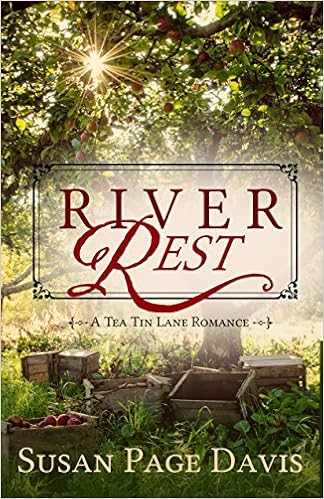
River Rest, Inspirational Fiction for a Teacher's Heart

Inspirational fiction author Susan Page Davis (my mother) has written over sixty books, but her newest, River Rest, is close to her heart. The story was inspired by the antique diary of a young woman in rural Maine.

"Unable to depend on her father to heal the crumbling family, Judith is afraid to trust the mysterious neighbor, Ben, who lives with his own grief.

"In rural Maine in 1918, Judith Chadbourne gives up her teaching job after her mother’s death to help her father with her five siblings. But when her father sinks into deep depression and her brother Joel is drafted, the household chores and farm work may overwhelm her. Neighbor Ben Thayer offers to buy their farm, shocking Judith and angering her father. An outsider from New York, Ben seems rich and mysterious, but his heart aches from his own loss. Judith accidentally breaks the antique crystal Christmas ornament her mother loved. The splintering star echoes her family’s shattering. Ben’s efforts to help make Judith suspicious, but when Joel falls critically ill at the army camp, Ben’s aid brings the beginnings of trust. After the armistice, the community and family start to recover from the strain of the war, but Judith learns independence is lonely. When Ben is injured, she is the only one who can help him. Can love take her beyond the frozen Maine winter?"

Available now in print or Kindle from Tea Tin Press.
Find Susan's other books here, or stop by her Web site to enter to win free books.

Tuesday, May 31, 2016

A Paying Opportunity for Writing About Teaching

For those of you who are writers in addition to being teachers, check out this paid writing opportunity from Chicken Soup for the Soul. Just scroll down to the "Stories about teachers and teaching" section header. If you're new to freelance writing but have always wanted to give it a try, be sure to visit the Story Guidelines page before getting started. Follow directions precisely for best chances of success. Because the editorial process takes time, you might wait up to 60 days to hear that you've been accepted. Writers learn to be patient while waiting. This particular market will not inform you if they have rejected your work. And remember, it's highly competitive, so rejection does happen. Keep your head up and try again!

Deadline for this collection: June 30
Word count: under 1200 words
Pay: $200 one month after publication