". . .the word of God is not bound." II Tim. 2:9b

Showing posts with label unstructured play. Show all posts

Sunday, July 3, 2016

Unstructured Play Week, Day 4, Part 2: Finger Paint Is Everywhere!

"For we are God’s handiwork, created in Christ Jesus to do good works, which God prepared in advance for us to do." Ephesians 2:10 NIV

By my daughter, age 11
Welcome to Day 4, Part 2 of Unstructured Play Week at Christian Teacher, Public School. Earlier I listed my 12 Tips for Adults in the Lives of Kids who are Artists. Now it's time to really make a splash, with finger paints!

Finger painting is a rare treat for preschool kids because the adults in their lives are afraid of the mess. When doing art with my preschool son, I sometimes underestimate the time it will take, the mess it will make, and the fun he will have! Finger painting falls under Unstructured Play because kids get to call the shots. Don't give them patterns. Don't show them examples of finished work. Just get your hands in the paint and have fun. The art will follow.

The Paint
Ordinarily, I steer clear of washable paints for school and home use because the colors tend to be less vibrant. When I taught kindergarten, I recommended Prang watercolors because there's a noticeable difference in brightness. When it comes to finger painting, though, washable, non-toxic paint is the way to go. Right now my kids use Rich Art's Clear Colors Washable Tempera Paints in primary colors that mix well to form other colors. When dry on the paper they're not as bright as I'd expected, but they do the job. Another option? Make your own finger paints.

The Paper
I bought Pacon Finger Paint Art Paper in a big, messy masterpiece-friendly 11" x 16." It's not too pricey, and it's worth the investment to get the best look from the paint and make sure the paper won't deteriorate.

Other Supplies and Prep
Even with washable paint, you need some type of smock (an old tee shirt that's a few sizes too big is perfect) or apron. To protect surfaces, lay down newspaper, and have paper towels handy to help with cleanup. Use paper plates to hold the paint while in use. You'll also need to designate a safe, flat surface for finished artwork to dry.


 After a few unexpected days off, we finally broke out the finger paints at the kitchen table. My daughter, eleven, is more comfortable than the boys are with getting her fingers messy for the sake of art. She focused on abstract paint application techniques and not on a specific theme or subject.


Vampire painting by my middle son
My middle son, nine years old and more reserved, painted a vampire. His inspiration was a favorite video game he's been missing since our family has opted for a "Privilege-Free Summer." We're trying to get the kids outside more and get them reading. It's been good to be able to sit down with the kids for Bible story reading and prayer more regularly.


The youngest, age four, was also hesitant to get his fingers messy. How blessed am I to have kids who wash their hands! But he dipped a finger in the black paint and soon got started. His favorite art subject is super heroes. I'm glad I took a picture of his painting before he decided to slop water on it with a paper towel!

Super Heroes
This picture is of "Super heroes doing the things that they like to do." It's fun to ask kids to tell you about their artwork. Sometimes you get a whole story to go with it.

I hope this post has been fun, and that it encourages you to include unstructured play time in your children's and your students' day. If you haven't read the other posts in the series, here are the links again. Please leave a comment and share! And happy Independence Day.

Unstructured Play Week
Day 1 Paper dolls
Day 2 Kitchen Chemistry and Cooking
Day 3 A Hike Up the Creek
Day 4, Part 1 Every Child an Artist, including 12 Suggestions for Grown-ups in the Lives of Young Artists


Coloring Books to Relax

Friday, July 1, 2016

More Goodies in the Mail

I must not be checking my mail often enough. Somehow, all these goodies keep arriving in batches. Today's mail brought me three special blessings!

First, the July/August issue of Christianity Today. This issue alone is enough to make me urge you to subscribe (and no, I'm not an affiliate of theirs!). The focus for July/August is "Meet the Makers: 20 Leaders Mixing Faith and Innovation." Featuring creative people like Pete Docter, story creator and screenplay writer of Inside Out, and Lara Casey, who founded Southern Weddings magazine, the issue has my creative juices flowing already, and I've only just skimmed it. Even my four-year-old finds it inspiring. He's making me repeat the names of the art tools on the cover to him over and over again!

Second treat in my mailbox: my new business cards from Vistaprint (nope, not affiliated with them either). Love them!

Single-Column ESV Journaling Bible
And third, my order from Dayspring (yes, I'm proud to be affiliated). As soon as I saw the Single-Column ESV Journaling Bible, Summer Garden, I had to have it. It will be a Christmas present for me from my husband. (Surely I'm not the only one who Christmas shops this way?) And my other Dayspring goodie was Sadie Robertson's Scripture Shareables. They're business card-sized, cute, and perfect for tucking in a card or putting out on the table at conference sessions like the ones I'm presenting in July. Fun surprise when I got them, they have cute heart-shaped cut-outs in the corners. I guess you could put the cards on a ring for easy memorization. I think these and the journaling Bible would both make great gifts.

Scripture Shareables
That's all for now. If you'd like to give someone else "Goodies in the Mail," I love Dayspring's eCard Studio. It's easy to use, and the cards emphasize encouragement and the light of the Word.

After two spontaneous day trips to the mountains, I'll soon be free to wrap up Unstructured Play Week. Hope to see you here!

Unstructured Play Week
Day 1 Paper dolls
Day 2 Kitchen Chemistry and Cooking
Day 3 A Hike Up the Creek
Day 4, Part 1 Every Child an Artist, including 12 Suggestions for Grown-ups in the Lives of Young Artists

Wednesday, June 29, 2016

Unstructured Play Week, Day 4, Part 1: Every Child an Artist

"He has made everything beautiful in its time." Ecclesiastes 3:11 ESV

Welcome back to Unstructured Play Week on Christian Teacher, Public School! Yesterday we rambled through the alfalfa field to a sandy beach in the middle of an Idaho creek. Today, we do art!

By my daughter, then three years old
My daughter's first artistic attempts came at age three, when she scribbled geometric shapes and named them like people. She loved birds, especially swans and ducks, so as her drawing skills developed, she often drew waterfowl. She went through reams of paper, usually leaving her work strewn about the house for her parents to gather up later. She was a living embodiment of the phrase "Practice makes perfect." Hundreds of papers, each with a single swan in black ball-point pen.


Blue Jay
When she was small, she didn't gravitate toward coloring books, which turned out fine because she learned to draw instead of learning to fill in predetermined forms. Now, she enjoys coloring books, too. The blue jay and Baltimore orioles at left are some of her recent coloring ventures from Dover Publications' Fifty Favorite Birds coloring book by Lisa Bonforte.


My middle son drawing
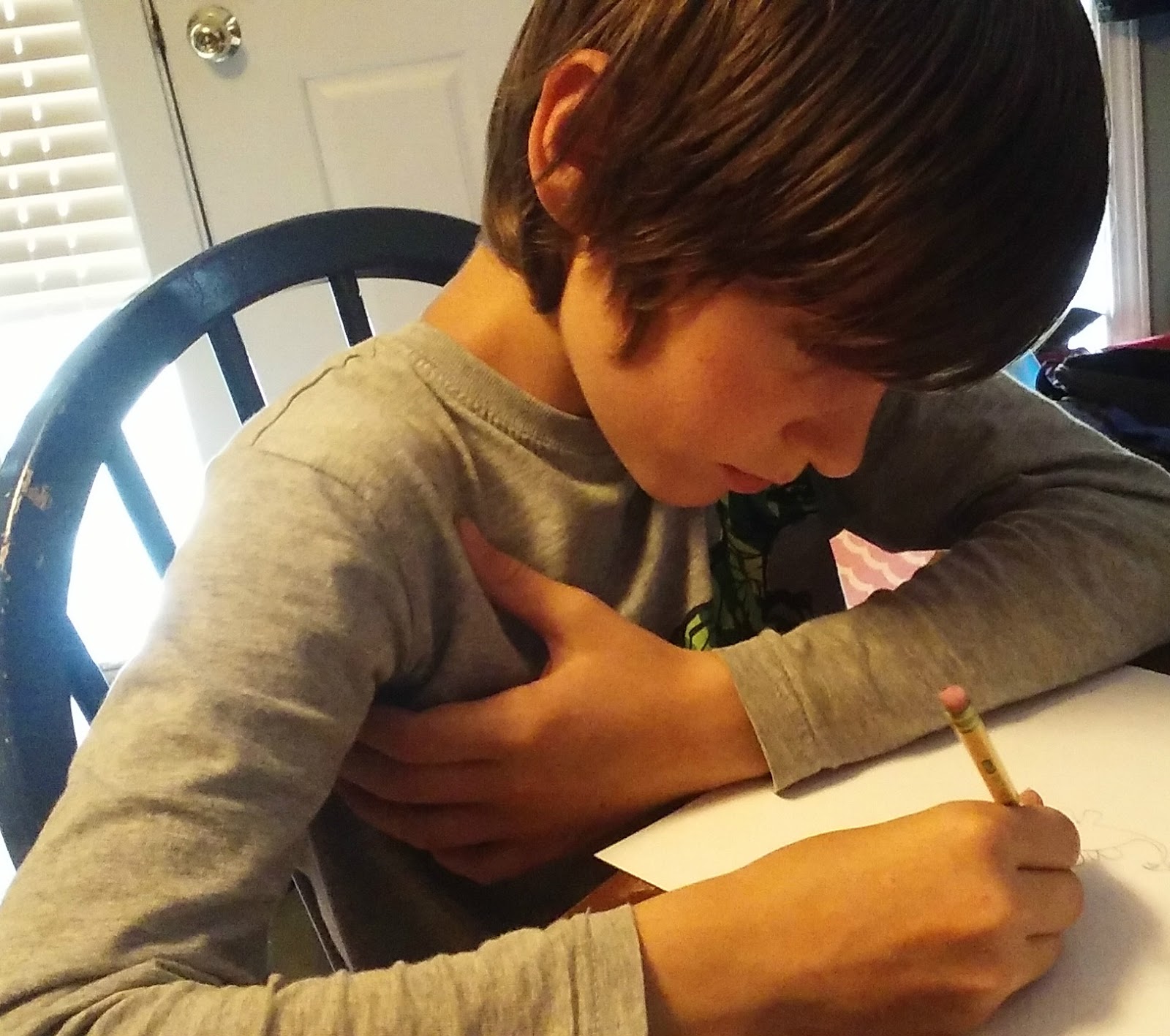
Today, all three of my children draw and paint. Two of them write and illustrate their own games, graphic novels and comics. Lest you think my children unusual, Picasso famously said that every child is an artist; the trick is for him to remain an artist when he grows up.


Baltimore Oriole
So what can we, as teachers and parents, do to fan the flames of the little artists in our lives? What I know on this subject has come to me through trial and error and through the never ending joy of having children who draw. The following tips will help you keep art unstructured and playful.


Twelve Suggestions for Grown-ups in the Lives of Young Artists:
  1. Don't criticize. (You might be thinking, "You mean 'Don't criticize much.'" No. I mean, "Don't criticize." Let the artist grow first. It doesn't mean you have to praise every effort highly. Simply nurture. You don't prune a sprout). 
  2. Nurture resilience: artists grow by failing and trying again.
  3. Be sincere.
  4. Find the good and engage with it. When a child presents you with a drawing of a clearly human yet ill-formed creature with scraggly hair and no nose, it's time to say "Now, I should recognize this person, shouldn't I? Look at that big smile!" instead of "Who is that supposed to be?" (Note, it might be a drawing of you, so be careful!)
  5. Teach children to observe. Simply seeing the world around them is the most important skill kids can learn if they wish to pursue art.
  6. Allow derivative work. A child draws a scene from My Little Pony or Angry Birds. Should you freak out because of copyright violation? No. The child is not going to sell the work. When it's time to go pro, then emphasize originality.
  7. Provide the tools. You are the one with the classroom supply budget (I hope you have a good
    By my son, age 9
    one!) or the wallet. Maybe you can't afford an array of glorious new art supplies, but you can buy a box of crayons or a tray of watercolor paints. If you are able to provide more, also make provision for storage.
  8. Help with the cleanup. This means training the child to clean up after him- or herself, and then stepping up to assist when needed. The training part is tedious, but neglect it to your peril.
  9. Be calm when some aspect of the art adventure gets out of hand. It sends a mixed message to kids when one minute you're praising their drawing and the next you're yelling at them for making a mess. Send one message all the time: "I love that you love art!" For Christians, it helps to keep in mind that God is the Creator; a child's creativity is a reflection of God's power and beauty. Be still.
  10. Help find display venues; supply hardware and help.
  11. Recognize talent. There may be that one student in a class of twenty-five who clearly needs to be an artist. Do your part to help ensure art stays in his or her life for the long haul.
  12. Refer to the child as an artist, not a child who "wants to be an artist."
By my daughter at age 11
Addendum to #5 above: Have you ever been to an indie art supply store? The sights! The smells! Take the artist-child and get thee to an art supply store!

If you know more ways parents and teachers can encourage children who are artists, please share them! 

And check back later today for Part 2 of Every Child an Artist, when we break out the finger paint!

Tuesday, June 28, 2016

Unstructured Play Week, Day 3: A Hike Up the Creek

"The earth is full of Thy lovingkindness, O Lord; Teach me Thy statutes." Psalm 119:64

The creek runs along the edge of an alfalfa field near town. Photos by Amy Ballard.

Welcome to Day 3 of Unstructured Play Week! Yesterday we played in the kitchen. Today we hike up the creek in rural Idaho for endless, unscripted play in the water, sand, mud, trees, and sun. Hope you brought your sun glasses and water shoes!

Recently, stories have circulated on Facebook and elsewhere asserting that American schools think recess is a waste of time, while schools in Europe often send students outdoors for unstructured, hands-on play time in nature. The stories smack of propaganda, but they are still a springboard for discussion.

There is an undeniable body of evidence that kids need to get outdoors and to have free play. One source that eloquently argues for getting kids out into nature is the Child Mind Institute. Cited benefits of time outdoors include building confidence and creativity, providing different stimulation, getting kids moving, making them think, and reducing stress and fatigue. All of this can happen through play, without adult-imposed structure or set learning objectives.

Here in southern Idaho, there are many creeks that run down out of the mountains toward larger streams and eventually to the Snake River and the Pacific. They provide a glorious playground for fishing, swimming, canoeing, kayaking, rafting, and other hobbies. But there are simpler ways to while away a sunny day at the creek, and kids know how to find them.

Makeshift minnow bucket
Recently, my children and I took two excursions up the creek near our home. We had so much fun the first time that we invited cousins on the second trip.

My daughter caught minnows in a bucket the first day, but when we forgot the bucket the next day, she had to make do with (ironically) a Swedish Fish bag. It worked just fine. She later released the little fishies back into the wild.

She and her cousins also made tiny houses out of rocks, mud, and decorative grass, moss, feathers, and flowers they found in the woods around our little beach. Each child expressed a different architectural bent and decorative flair.


Mud houses in the making
Meanwhile, the youngest two of our crew sat in a shady part of the creek and played with mud contentedly in their own private hot tub.


Cheeto the walking stick
Kids love playing creatively with sticks. On the first day at the creek, my youngest son adopted a walking stick and inexplicably named it "Cheeto." Later, he began digging for dinosaur bones (rocks) and identifying his finds. "This is a velociraptor tooth! Here's where it attaches to the gum, and here's where it cuts up the meat!"

We took time for simply enjoying nature, too. In the soft mud at the edge of the creek, duck and raccoon prints spoke of recent animal visits. The kids spotted birds in the air above us, including prairie falcons and yellow-headed blackbirds, and my daughter spied a duck hiding in a shady bend in the creek.

Wild flowers
There were wildflowers like yellow sweet-clover all around, and of course, the low, scrubby willows that are everywhere along Idaho's streams. What better place to spend a summer afternoon?


More wildflowers
Of course, not everyone lives in a rural area, so it can be more challenging to find a place for kids to play freely in nature. Chances are, you've already scouted out the local parks. Have you tried picnic areas beside rivers, streams, and lakes in or near your city?

Or maybe it's time to plan an outing just a few hours from home so the kids can sink their toes into the mud, hear the wind in the trees, and forget about technology for a while.

Fun by the creek
Although I'm not what you'd call a tree hugger or a hippie, I did grow up in the woods of Maine and can attest to the tranquility and happiness of time spent in the natural world. I hope that as parents and teachers and Christians we'll all head out into nature often, both to give children more and better opportunities for unstructured play and for our own reflection.

The Bible often speaks of the beauty of Creation and how everything that was made praises God. In just one example, Job 12:7-10 says,
“But now ask the beasts, and let them teach you; And the birds of the heavens, and let them tell you. Or speak to the earth, and let it teach you; And let the fish of the sea declare to you. Who among all these does not know That the hand of the Lord has done this, In whose hand is the life of every living thing, And the breath of all mankind?"
American naturalist John Burroughs reflected,
"I go to nature to be soothed and healed, and to have my senses put in order."
Today, kids and teachers alike are desperate for that kind of low-tech recharge.

Come back tomorrow for more on unstructured play, this time in the vivid world of art.

The Field and Forest Handy Book

Monday, June 27, 2016

Unstructured Play Week, Day 2: Kitchen Chemistry and Cooking Fun

"Oh, taste and see that the Lord is good! Blessed is the man who takes refuge in him!" Psalm 34:8

It's another fun day for unstructured play resources and discussions. Yesterday we talked paper dolls, and today it's kids in the kitchen!

About a week ago, I had morning devotions and prayer with my three children, then randomly asked them, "What fun adventures are the Ballard children going to have today?" To my surprise, my youngest son, age four, piped up: "Chemistry experiments!"

No, we do not have a chemistry lab in our home. We make do with our humble kitchen. And before you think that I am some kind of super mom/teacher who goes online and tracks down intricate, mind-blowing science stuff to teach her kids in her free time, let me assure you. It's really not like that.

My Play Kitchen Sticker Activity Book
Usually, science in my kitchen begins with "Mom, I'm bored," or "What would happen if. . . ?" Most recently, my youngest got to play with a toy Minecraft torch at a friend's house. Any kind of flashlight entertains a child of four, but this was extra fun because it was a torch, albeit a battery-operated one. Naturally, he wanted me to buy one for him. I couldn't gratify his toy wish immediately, but we did the next best thing. We made a real torch in the kitchen.

Note: This torch is not a toy. Also, making the torch is not unstructured play. I'm just throwing this in here because it happened in my kitchen, the kids loved it, and I like to play with fire. Please supervise your kids carefully if trying this at home!

How to Make a Torch

The Ingredients:
1 stick from outside (a greener one won't be as likely to burn)
1 large cotton ball
1 wire twist-tie from a bread bag
Oil (we tested vegetable oil and olive oil)
Matches or lighter

Instructions: Over metal sink or in another safe, supervised place, attach cotton ball to tip of stick with twist-tie. Douse with enough oil to partially saturate the cotton ball. Carefully ignite the cotton ball with match or lighter. You now have a torch! How long does it burn? Does it stay burning longer than a cotton ball with no oil on it?

Another Note: Please do not allow children to carry torch around. This is a good time to have that talk with them about not playing with matches. . .or fire. . .or making torches. . .without an adult supervising.

Okay, as I said, that activity falls under "structured play," or at least "carefully supervised, adult-assisted play," and this week's focus is Unstructured Play. Let's get back to that stuff.

kids play

I often turn my kids loose in the kitchen with "chemistry stuff." Even my four-year-old knows that the really fun ingredients are baking soda and vinegar. One time we used those ingredients to make some home-made cleaning solution, and now he offers to make more just so he can see the volcano effect.

kitchen chemistry kids
Many TV shows, movies, and games show people using chemistry sets (Sherlock Holmes, anyone?), but how many parents think to put realistic chemistry equipment into their kids' hands? I'm not talking glass beakers and graduated cylinders. I'm talking plastic ones. Maybe even homespun versions made from yogurt containers, medicine dose cups, or pop bottles. The "chemicals" should of course be safe, and they don't have to be complicated. My kids love to play with food coloring, salt, water, lemon juice, and of course, baking soda and vinegar. Playing with these materials requires very little supervision, and kids will make discoveries all on their own. If they ask "Why does it do that?" or "How does it work?" all you really need to tell a preschooler is "It's science!" But if you can explain it, they'll probably never forget.

Color & Cook Activity Book
Besides chemistry, the kitchen is also the scene of many an edible concoction. Sure, you can buy a kids' cookbook, but it's also fun to simply move aside and let the magic happen. My middle son can be a picky eater, so he has developed a few recipes of his own. He's becoming known in the family as a quirky chef!

One of his favorites is hamburger tacos:

Hamburger Tacos
Make tacos according to your favorite family recipe, but substitute ketchup for salsa. Add sliced dill pickles and whatever else you like on a hamburger.

And his most recent invention, which covers dinner and dessert:

Brownie-Peanut Butter Sandwich
Generously spread one slice of bread with creamy peanut butter. Generously spread another slice with Nutella hazelnut spread. Place a chewy brownie on one slice and close up sandwich. For a healthier option, substitute slices of banana or strawberries for the brownie.

Kids don't come up with creative ideas like these if they're given the impression that only grown-ups are allowed in the kitchen, or that all food comes from a strictly-followed recipe (or from a box).

More Ideas for Unstructured Kitchen Play
  • Turn kids loose to create musical instruments from kitchen items
  • Let kids wash dishes the old-fashioned way with sudsy water in the sink (this is more fun if they don't often get to try this)
  • Let them give their water-safe dolls and toys a bath in the sink
  • Stockpile recycleables and challenge kids to build a robot from them (Credit for that idea goes to a teacher friend, Candice!)
  • Frosting cupcakes or decorating cookies requires little supervision if you don't care about posting the results on Pinterest
  • Preschoolers will love making a tower or fort out of pantry items like cans and boxes
My grandparents' house
My grandmother used to turn her grandchildren loose with kitchen items (slotted spoons, colanders, empty spice tins) and send us outside to the driveway to dig, scoop, sift, and pour to our hearts' content. It was the next best thing to a sand box.

I hope you enjoyed messing around in my kitchen today. Please leave a comment below to share your favorite kitchen play activities! And stop by throughout the week for more on Unstructured Play. Tomorrow we go outdoors and take a hike up the creek (or "crick," as it is sometimes called in rural Idaho). Carry your water shoes!

Sunday, June 26, 2016

Unstructured Play Week, Day 1: Paper Doll Play

"God created man in His own image, in the image of God He created him; male and female He created them."  Genesis 1:27 NASB

Experts emphasize that kids need unstructured play time in their day. This week on Christian Teacher, Public School, we focus on the joys and benefits of "open-ended play that has no specific learning objective," as verywell.com defines unstructured play. As youngsters learn about themselves and the world around them, they need times when they are allowed to self-direct their learning.

In unstructured play, adults may be present, but are not orchestrating play toward an objective. Kids choose what to play and how to play, and adults provide the time, space, and materials for that to happen.

Which brings us to one form of unstructured play that's close to my heart: paper dolls.

As with other play activities, when playing with paper dolls, kids will unknowingly meet some learning objectives their parents and teachers have in mind for them. kids have fun while honing their fine motor skills (cutting out, folding), social skills (especially verbal interaction), storytelling, and creativity. They think through scenarios like "Which outfit is best for this occasion?", "Do these clothes match?", "How will the doll react to another doll's behavior?", and "What goes into planning a ball or a dinner?" This is low-tech, open-ended play with no unnecessary frills. Girls and boys of nearly any age can play, and Grandmas love to get in on the game.

I've loved paper dolls since I was a little girl. It started with playing in the church basement during the evening worship service. One of the single ladies of the church had a ministry of caring for kids during one service per week. She brought in many types of activities for unstructured play, but the only one I remember was the paper dolls. My best friend and I were never happier than playing Barbie and Princess Di, both of whom had dozens of dresses and other outfits to choose from.

Grumpy Cat Paper Dolls
Later, in the homeschool group to which my family belonged, we were studying the Pilgrims, and my mother bought the first paper dolls I remember owning, Tom Tierney's American Family of the Pilgrim Period from Dover Publications. (Mom, incidentally, knew the magic of paper dolls, having played with Karen and Cubby from the Mousketeers and Pebbles and Bamm-Bamm from the Flintstones when she was a girl). She used the Pilgrim dolls along with other resources to teach us about life in early America. Meanwhile, I fell in love with paper dolls all over again. My collection had begun!

Paper dolls gave me an early passion for fashion history. They also taught me some basic principles of line, symmetry, proportion, and other elements of style that have helped me in many ways, not the least of which is in sewing clothing.

My daughter has inherited my love of paper dolls, and inherited many of my old paper doll sets, too. As a teacher and homeschool mom, I still love to scoop up coloring books, classic literature, and of course paper dolls from Dover.

There are countless classroom applications for these products (for which this blog is an affiliate), but they are also a natural fit for unstructured play at home. I love to see paper dolls all over my floor and my daughter's imagination at work. Since she is the only daughter among three children, she enlists my help with cutting out the dolls and their clothes (a nicely therapeutic activity) and, yes, playing with them. Last time, we used mostly Renaissance and Colonial-era sets. I was amazed at how many we had!


We started with the Christopher Columbus set (currently out of print) by Tom Tierney, my favorite paper doll artist. Then we rounded up dolls from other sets that (kind of) went with the time period. Okay, Princess Diana was an anachronism, but she has the best dresses! My favorite set of all time is Jeanette MacDonald and Nelson Eddy (OOP), and they got to play this time, too, despite their worn tab folds and missing hats. Their outfits from the movie New Moon and Naughty Marietta roughly fit our time period.

Another set we used for the first time was Colonial Fashions, which my husband had reserved for my daughter from his used book business. As it turned out, this set provided many eligible bachelors to attend our balls. The two female dolls come with many dresses, while the pre-clothed men are numerous. That way, even when Christopher Columbus and his crew were off sailing, there were plenty of men to dance with.


My daughter's Fashions of the Old South dolls might have been a bit ahead of their time for our game, but we still fit them in. Adding soldiers reminded me of the paper doll wars of my childhood, when my sisters and I would recruit every doll we owned for a reenactment of the Civil War. Even Jo March from Little Women joined up!

Paper doll sets are wonderful as educational aids, but can also be a natural arena for unstructured, imaginative play all year long. When kids get the hang of cutting them out and dressing them, they may even begin making their own from card stock, decorative papers, feathers, and fabric (some of the same materials you keep on hand for gift wrapping, card- and ornament-making, sewing, or scrapbooking).

I hope you enjoyed this journey into the world of paper dolls. Please leave a comment, and stop by throughout the week for more ideas for unstructured play! Tomorrow it's Kitchen Chemistry and Cooking Fun.