". . .the word of God is not bound." II Tim. 2:9b

Showing posts with label literature. Show all posts

Thursday, July 12, 2018

A little bit of mystery

". . .how much happier that man is who believes his native town to be the world, than he who aspires to become greater than his nature will allow."

Seems like a funny quote for a teacher to post.

Don't we want our students to learn of the world, to understand that their native town is not all there is?

And what's this about "than his nature will allow"?

Where does this quote come from, anyway?

Great questons. The kind of questions we want students asking. The kind that comes from mystery, omitted information, suspense. The kind that leads to deep understanding of a text like. . .drumroll. . .Frankenstein by Mary Shelley.

Okay, Frankenstein has been on my To-Read list for. . .a lifetime. After reading Romantic Outlaws: The Extraordinary Lives of Mary Wollstonecraft and Her Daughter Mary Shelley, I moved Frankenstein to my To-Read-This-Summer-If-I-Have-Time list. There it sat.

Then I went to the (most fun ever!) P20 Educator Conference this week and attended Laurie Roberts's fantastic session entitled "Why Don't They Read? Leveraging the Power of Mystery." I knew this would be a powerful session for me because

  • Laurie is a fellow-Idaho Core Teacher Network alum
  • My students need all the help they can get when it comes to reading literature
  • I need all the help I can get to hook kids on reading
  • I love improving the way I approach teaching literature
  • Adding mystery and suspense to anything is always a good move
  • Laurie is an awesome presenter (did I already mention that?)

Lo and behold, in her session, Laurie unfolded an adaptation of the Document-Based-Inquiry (DBI) process using none other than Mary Shelley's Frankenstein, now in its 200th year of publication. She engaged us with the text right off the bat by having us read the first letter Robert Walton writes to his sister in the opening pages of the novel.
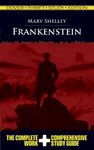
Frankenstein Thrift Study Edition

How was that mysterious and/or suspenseful? The mystery was organic, since most of us had no context other than the paper in our hands and the vague notions of the plot of Frankenstein we had garnered from pop culture. Even as we read silently for eight full minutes of dense pre-Victorian text, the story began to work its magic on us. Laurie had provided a notecatcher for recording notices, wonders, and predictions, so we scribbled away as we read.

Why did his father not want him to go to sea? I wondered.

This text is straight-up Romantic Era literature, I noticed. The second paragraph is full of descriptions of nature, and the whole thing emphasizes emotion.

I'm a slow reader, so I didn't finish in eight minutes, but I couldn't wait to read the rest of it later. In the meantime, Laurie gave us time to discuss within small groups. My group included three other teachers, two of whom consider themselves avid readers and one who considers herself a reluctant reader. We took turns sharing what we'd noticed, wondered, and predicted while reading.

Each of us took something different away from the reading, while of course there were overlaps, too. I shared that I had at first struggled to figure out the object of Robert Walton's explorations. Another teacher shared that she had noticed the emotional highs and lows that Walton experienced. We nominated her to share out to the whole class when Laurie moved on to calling on each group

As I listened to the many perspectives on the pages we had read, I thought how powerfully the process fostered peer-to-peer instruction. Laurie wasn't teaching us Frankenstein. We were teaching us Frankenstein.

Needless to say, I was mentally moving the novel to my Must-At-All-Costs-Read-As-Soon-As-I-Get-Home-From-This-Conference shelf!
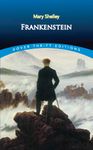
Frankenstein

In her AP Literature classes at Timberline High School in Boise, Laurie repeats the 8-minute reading, note-taking, and discussion process with the other letters from the prologue of the novel. Notecatchers typically aren't graded. Each new letter adds layers of meaning, new information, sparking new notices, wonders, and predictions.

Where's the monster? Isn't there suposed to be a monster?

This expedition is not going to end well.

I said at the beginning that this process is an adaptation of the DBI process. A typical Document-Based-Inquiry begins with accessible texts that may be in video, audio, or image form. The process then moves into more informative, more complex text forms that add the next layer of meaning. A third and final round of documents may include texts that help students synthesize what they have learned. What Laurie did with Frankenstein was get readers hooked on the text itself, rather than potentially distracting or boring them by lecturing about the author, showing a PowerPoint, or otherwise "introducing the text." There's no need. You can do that stuff later if you need to. The suspense is in the text, if we'll just tap into it.

Now I'm several chapters into the novel. The anticipation I built by reading Romantic Outlaws and attending Laurie's session is being fulfilled on every page. I only hope I can hook students on literature as effectively in my classroom.

Thanks, Laurie!


Want more?
Follow Laurie on Twitter @lauriedroberts.
Here's an awesome exemplar DBI that a teacher in the Idaho Core Teacher Network created.
I share my process of revising my Band of Brothers unit, which includes a DBI, here.
Follow me, Amy Ballard, on Goodreads.

Saturday, February 4, 2017

Triple Entry Journals for Character Analysis in Lord of the Flies


Need resources for Lord of the Flies? I've just created a character analysis tool that will get students talking and writing about the text. Triple-entry journals are fun and easy, and they put the focus where it should be—on the text. The journals in this pack are designed for each of the four main characters in Lord of the Flies, but here's an open version you can use with any novel to analyze any aspect of the text.


Visit my store, Brevity, on Teachers Pay Teachers for more resources that are aligned with the standards you need to teach!


Thursday, August 11, 2016

Shakespeare's First Folio Comes To Boise, Idaho

Learn about school trips
A rare First Folio is coming to Boise! Visit the First Folio Web site to plan a class trip or other visit. There are lots of fun activities for kids and adults, as well as PD opportunities for teachers.

From the school trip registration page:

"Free Field Trip Opportunity from Boise State University, Albertsons Library and The Arts and Humanities Institute
You are invited to encounter Shakespeare's 1623 First Folio. Help theater, poetry, and literature come alive for your students at this once-in-a-lifetime event.
In celebration of the 400th anniversary of Shakespeare's 1616 death, the Folger Shakespeare Library in Washington, D.C. has arranged the ultimate book tour, with a Folio stopping in each state for a limited time.  As the only stop in Idaho, Boise will play host to the book that gave us The Bard as we know him.  Don't miss this unique chance to share Shakespeare with your students!"

Dates: Monday, August 29 - Friday, September 16

To find out more, contact the First Folio team at firstfolio@boisestate.edu.

Sunday, May 22, 2016

Teaching Literary Elements with Famous Shakespearean Quotes

Famous quotes from Julius Caesar

Before I introduce a Shakespeare play to any of my classes, I familiarize students with some of the famous quotes from the play. In addition to giving them a glimpse of what's ahead and building anticipation, it's an opportunity to teach literary elements. I start as much as a semester before reading the play in class.

Famous quotes from Macbeth

Students enjoy memorizing short, easy quotes, especially since many Shakespearean quotes are already familiar from movies and cartoons. As a bonus, when you later read the play, the quotes appear in context. It's like meeting up with an old friend.

Visit my Teachers Pay Teachers store, Brevity, to purchase the wall docs for quotes from Romeo and Juliet, Macbeth, and Julius Caesar.

Kindergarten, First, Second, Third, Fourth, Fifth, Sixth, Seventh, Eighth, Ninth, Tenth, Eleventh, Twelfth, Homeschooler, Not Grade Specific - TeachersPayTeachers.com

Friday, November 27, 2015

The Christian Teacher's Close-Reading Superpower


One of the hot topics in education is close reading, or "reading to uncover layers of meaning that lead to deep comprehension" ("Closing in on Close Reading" by Nancy Boyles). In order to meet state standards, particularly in Common Core states, teachers are introducing close reading skills as early as Kindergarten.

Some approaches to close reading are:

      Examining meaning thoroughly and analytically
      Directing attention to the text, central ideas, and supporting details
      Reflecting on meanings of individual words and sentences, and
      Developing ideas over the course of the text (The Partnership for Assessment of Readiness for College and Careers, quoted by Nancy Boyles).

When I attend my professional development class twice a month, the instructor teases me because when she assigns a passage to read, she can trust me to close read it. The first time she pointed it out, I was a little surprised. I've always thought of myself as "a slow reader," though a good reader. I have to go slowly so I can extract the fullest meaning from the text, be it Pride and Prejudice or the book of John. Sometimes, I'm enjoying the author's techniques so much that I couldn't speed up if I wanted to. In a PD setting, this close-reading habit can get me into trouble because I may still be reading long after my colleagues have moved on. It can also cause me to fall behind on assignments. Still, I appreciated my instructor's assessment. Seeing my own close reading for what it was helped me to think about how to teach close reading strategies to my students.

What are some close reading strategies that work? Nancy Boyles outlines the following in her article:

      Work with short texts
      Aim for independence
      Teach students to ask the questions
      Focus on observing and analyzing

Boyles goes on to suggest the types of questions teachers need to teach students to ask. She also states that teachers need to be prepared to ask text-dependent questions while students are getting the hang of questioning the text for themselves.

What stands out to me as a Christian learning to teach close reading is the way the suggested text-dependent questions resemble the questions I ask when I read the Bible, particularly the more challenging passages.

For example, Boyles suggests teaching students to ask the following four basic questions:

      1. What is the author telling me here?
      2. Are there any hard or important words?
      3. What does the author want me to understand?
      4. How does the author play with language to add meaning?

If I'm reading a text like Matthew 8:11-12, my mind is swarming with questions just like these. What important truth is Jesus teaching here? What does he mean by "many will come from east and west and recline at the table with Abraham, Isaac and Jacob"? This looks like a prophecy. Why is it tucked in here between hearing the Centurion's story and healing his servant? What does the prophecy mean? Who are the "sons of the kingdom" who will be cast out into the outer darkness? What bearing does this short passage have on the miracle Jesus performs? On my life?

In the case of the passage above, I was so motivated by my unanswered questions that I consulted a commentary and read up on one theologian's interpretation. More often, I'll seek answers by comparing the challenging passage to another in the Bible (one of my college professors reminded his students constantly that "the best commentary on the Word of God is the Word of God").

This is studying the Word. This is meditating on it. This is treasuring its wisdom as David urges believers to do in Psalm 119. In the public school setting, it's just close reading, and the text and the purpose will be different. Instead of seeking to know the author of the Bible more intimately, we are seeking to become better readers of any complex text. Sometimes we are also seeking to make proficient on a standardized test. Still, Christian teachers who themselves close-read short Bible passages every day of their lives are experienced analysts of the finest literature ever written.

Close reading--and Bible study--do take practice. So does teaching close reading. But don't put yourself in a box (like my "slow reader" one). Understand that you bring skills to the table. Ask God to unleash your close-reading superpowers.